Saturday, 5 July 2014

A tropical conundrum in Afadjato and Wli Falls

In our second trip we would explore Volta region, on the east part of Ghana, close to neighbouring Togo. The trotro picked us up in the midst of the night. The ride was so crazy that I preferred to sleep than to be awake and consequently aware of the extreme speed, overruning and turbulence on a bumpy dark road. Things went as planned until an extended horn noise and some blindingly powerful lights woke me up. Although we were in the middle of nowhere, a huge lorry was speeding right towards us. I shut my eyes, convinced that I would soon see my life in photo frames. A laughter of relief coming from Mario interrupted my thoughts and assured me I was still on earth. He said "I was just thinking from which window I should escape".

A few hours later we arrived at our accomodation to rest till the morning. Next day, still shaking from last night's drive, we were warmly wellcomed by the owners of the hotel. Milo, eggs, yums were served in the restaurant as a breakfast in order to load up our batteries for the rest of the day.

http://thethreemonkeys.com/
Next up was hiking on Mountain Afadjato. A silent teenage girl with short hair, some of which was grey, sold us boiled eggs and water. The way to the top was steep and seemed pretty long under the hot sun. Finally, we reached the peak of the mountain, sweaty and proud. A group of excited students surrounded us, the obrunis, to take a picture together as if we were any Hollywood actors. A sign congratulated us on our acchievement "Wao! You have made it! You are on top of the highest mount in Ghana! Enjoy the panoramic view!" . But the sign was soon refuted by the sight of one clearly higher mount right next to it. 


 As it often happens in a tropical climate, the sun was succeeded by thick clouds, which resulted in no time in heavy rain. And there we were: On the top of the highest (or not) mountain of Ghana, exposed to tropical rain. The struggle of the Chinese to maintain their dryness subsided. Soon we were all soaking wet but totally happy. The way back was transformed into a muddy slide. I took off my non-suitable allstars and kept sliding barefoot. Some travellers were not discouraged by the rain and mud, and kept ascending the mountain. By the time I returned at the starting point I literally looked and felt like a dirty pig. Luckily our next stop would be Wli Falls, where we could have a nice swim.


In a little while we were at the entrance of the Waterfalls. We paid the fee and walked through the rainforest escorted by a guide, who was holding a vast umbrella. He was very helpful and obviously expected a tip. As we were approaching the highest Waterfalls of Ghana, the sound of the falling water pounding on the lake became more and more loud. The moment I saw this amazing spectacle, I had no second thoughts about swimming. Everybody was in the water, knowing how to swim or not. The sand was moving at some places and the depth of the lake variated. The Waterfall was so mesmerizing that we moved as close as possible to it, holding each other and creating a human chain. The water was gently "whipping" our backs, like a good massage. The feeling of freedom was unique.


Read More »

Monday, 23 June 2014

The gate of no return

It was Sunday morning. I woke up early in order to indulge my breakfast in my Oasis.I picked up my Africa book and sat at a table close to the beach. I ordered the popular Milo chocolate beverage, which came to pieces. Hot water, milk, sugar cubes and Milo- chocolate powder. The kind waitor helped me to cook my drink.


In a while the rest of the company woke up and we moved to the beach. An interesting everyday scene was unfolding before our eyes. A dozen of big fishermen were dragging the nets out of the sea. They were also singing  a motivational fishing song in an African language. The nets were spread far into the sea and judging from the hard effort depicted in the fishermen's faces, fishing was not an easy case. The majority of the fishes was gathered at the end of the nets. Nontheless some small fishes and sea snakes were accidentally caught on the way. They were collected carefully in plastic buckets by naked experienced kids. A man approached them and bargained on the price of the catch with the liliputian fishermen.


When the entire net was laying successfully on the shore the song seazed. Turmoil prevailed among the group. They were argueing upon the share of the catch. The amount of the fish each would take home, was depending primarily on the personal  contribution. Some were accused of inadequate input in the fishing process, while others underlined their essential help.

A girl, selling sachets of water, passed slowly in front of us. Her eyes were modestly looking at our direction. On her attempt to bring the heavy platter down, half of the sachets fell clumsily on the ground. She picks it up hastily, while shame was conceivable in her moves. Another woman was selling fried bread and cut it wide open to fill it with peanut butter. When the fishermen had vanished from our eyesight and everyone had taken a generous breakfast was time to head to the Cape Coast Castle  (http://www.ghanamuseums.org/forts/cape-coast-castle.php).

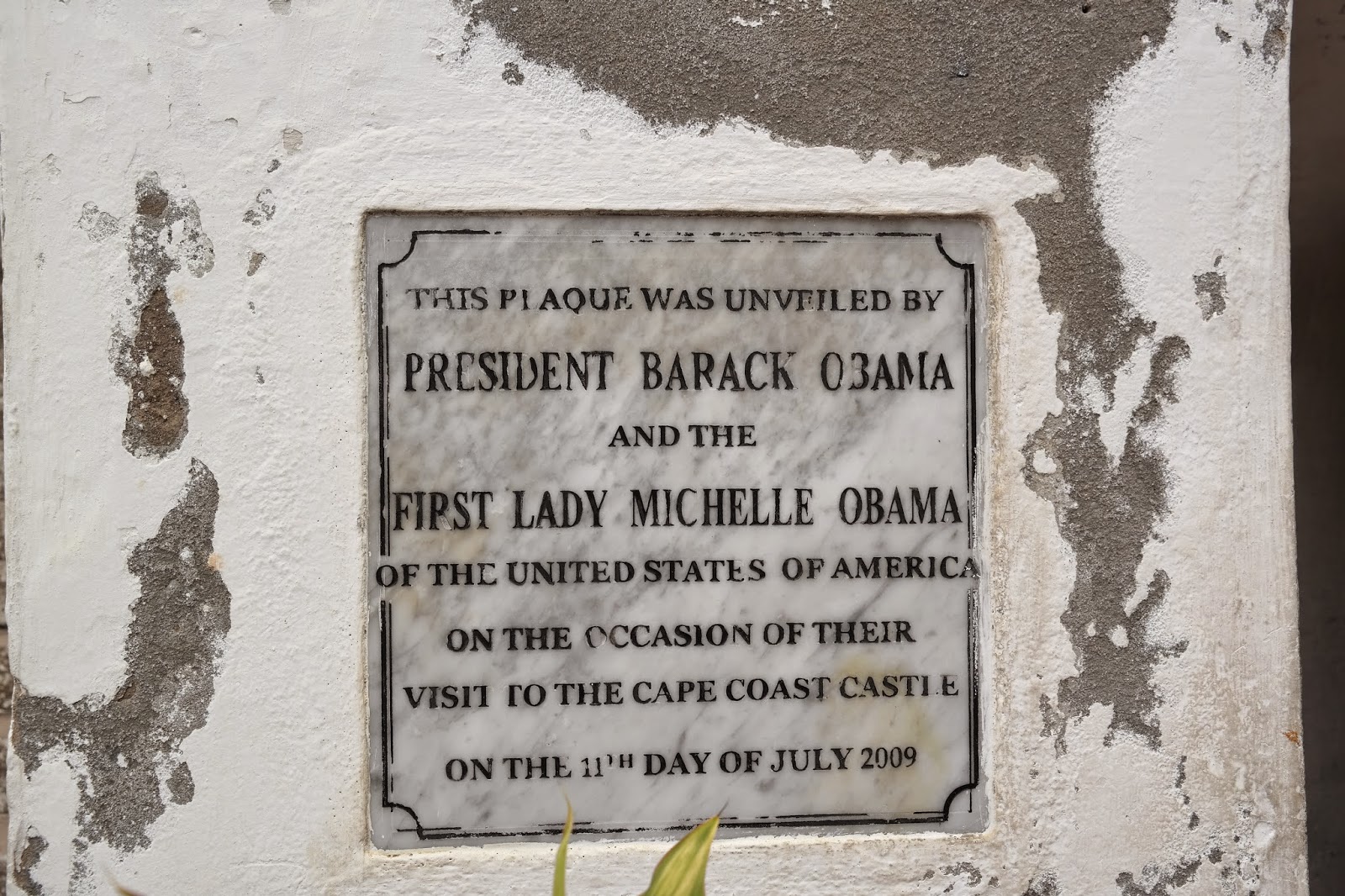
Driven by ignorance, a day before I had asked my Ghanian friend and guide, if Cape Coast Castle is an exciting place. He answered with a mysterious tone that I will figure out myself. So I did. Excitement was not the feeling that Cape Coast Castle caused to me, rather bewilderment, shame and  repugnance. The place, where we were standing, was actually one of the thirty "slave castles", where the slaves were held before shiped once and for all to the "New World", America. A spirited guide narrated the dreadfull history of the Castle. It had changed several hands in the past. Portuguese, Swedes, Danes, Dutch, French had passed from this strategic venue for trade, before the British established their power. For 150 years, the atrocious exploitation of human life had been the most prolific source of wealth for the Europeans and Americans. Cape Coast castle is a painful reminder of this inhuman human activity.


The captives generated from many neighbouring african countries and were forced to come to Ghana  by foot. The captives, who had survived the unfavourable trip were to be held underground until they were picked, sold and shiped away. Sometimes this process lasted even months Our first stop was the main concentration room for the men slaves. It had a tiny hole high on the wall and the atmosphere was sultry. It was imposible to imagine that a thousand men used to be held in that room. Scientific findings confirmed that the ground was covered by layers of human waste, blood and urine.


Close to this room the Europeans had built a church in order to not miss the chance to pray to their God. Ha! How ironic!

The next room was the cell where the people who dared to escape were to find excruciating death. The room had no windows at all and the walls were extremely thick. No food, no air, no light was accesible to the sentenced. Scratches on the walls and the floor gave away the pointless struggle of the slaves for survival. It felt as if the walls screamed from the horror of the untold human tragedies.


The women were held separately. Some of them were destined to become sex slaves. The children, who were born via rapes, were given European names and received western education. This way a new caste arose.
   

The "Gate of no return" was leading straight to the atlantic ocean. Its name was attributed to the fact that any slave who passed it would never view Africa again. The guide assured us bitterly that we will return.


Then we moved to the first floor, which belonged to the commander of the Castle. The contrast was unbearable. The space was huge, with vast windows, which allowed plenty of air and light to go through the rooms. A question was swirling in my mind: How could he ever sleep in this luxurious apartment while at the same time over a thousand people were dealing with diseases, hunger, fear, solitude, many of whom leaving their last breaths just a floor below?


“Those who deny freedom to others, deserve it not for themselves” 
― Abraham LincolnComplete Works - Volume XII

Read More »

Sunday, 22 June 2014

World-Cup vibe in Cape Coast

"Oasis beach resort" is best described by its name. After the exciting yet tiring canopywalk we headed to Cape Coast. A six-bed dormitory was waiting for us in Oasis. The resort is located straight on the beach. The big mighty atlantic waves create a mesmerising sound, that is spreading in the atmosphere. The summer resort is consisted of an open air restaurant, which serves both traditional and western dishes, and several accomodations in different styles and shapes. Some were white round huts, with big tribal signs engraved on them. Others were made out of wood and had a small porch with matching wooden stools in the front. Hammocks and picnic tables were completing the idyllic scenery. Cute little puppies were joyfully playing with the customers.


The resort was accomodating mostly volunteers, like us, who were travelling Ghana during their free time. Canadians, Americans, Germans were among the costumers. I honestly hadn't seen so many "obrunis" gathered in one place in Ghana. The average age was twenties to thirties. The vibe was extra-positive, with a little anticipation in it. You see, that night was a World Cup night and not just any World Cup night, but The Most Important one for Ghana. Germany vs Ghana. The entire country was tuned in the Football match rhythm. Huge posters were advertising the big football event, supporting the Black Stars, Ghana's national team. Everyone were talking feverously about the good chances of an African team managing a highplace in this World Cup. Even in the trotro a preacher mentioned the hope of Black Stars winning the Cup. 
    
Most of the obrunis were wearing a white T-shirt with African-inspired graphic print inserts on the neck and sleeves. It should  be noted that the Ghanian kit is considered to be one of the most fashionable in the World Cup. The Germany fans were also not missing. Even some Ghanians were supporting the European team. Jokes and teasing were increasing as the time approached. 

       
Shortly before the game started we made a walk in Cape Coast. The people seemed happy, although did not have even the basic comforts. Many small roads had been turned into World Cup venues. Neighbours were bringing their chairs together in order to view their team playing against one of the most powerful opponents. On the way back to the hotel, we took a shotcut and crossed the dark beach. We could merely see one another. A strange noise was coming from somewhere near. We discovered astonished that the noise was actually made by two cute pink pigs!
    
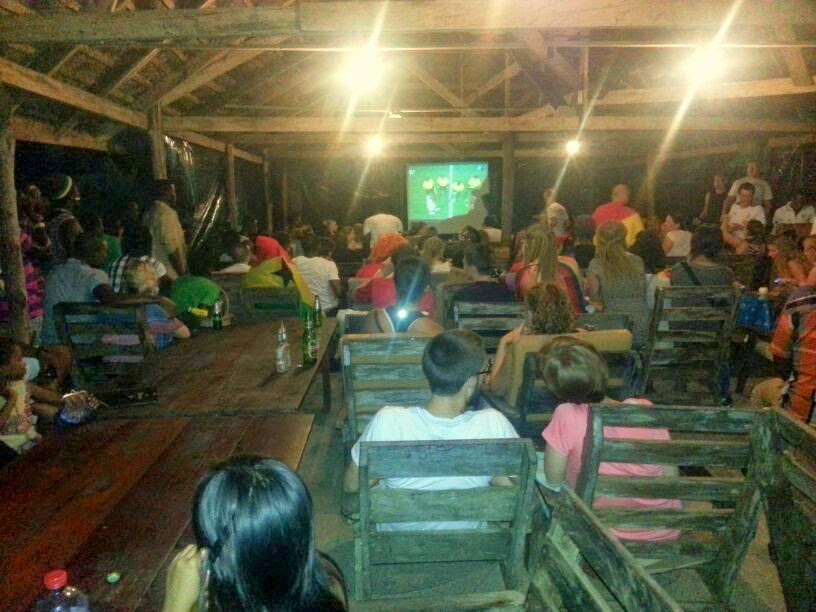
The restaurant now was much altered compared to the serene place we had left an hour ago. Costumers of the hotel and residents of Cape Coast had secured a place in front of the big screen. In every worth-to-mention phase of the game the crowd was both cheering and booing. Go, go, go Black Stars. Each Ghanian Goal was followed by happy Ghanian music. The final score was satisfactory for both teams. It was a draw. 


The match succeeded a fun beach party. Some African men impressed us once again with their dancing skills  on the raised dancing floor. After a non-stop performation in the party, we withdrew to the beach. Six girls from different parts of the world were chatting gazing at the ocean. Although unsaid, we shared a common comprehension that night. How far were we from our homes!


Read More »

Saturday, 21 June 2014

Walking on the canopy

Our first trip began in the most cheerful mood. Our personal trotro driver showed up on Saturday morning to make our virgin trip outside Accra happen. The agenda included Kakum national park and Cape Coast. 


When in the trotro, I felt that I was actually in a tropical place. The flora was dense and consisted of peculiar plants I had never met again. Plantain, banana trees, coconut trees. After a four hour drive, we found ourselves at the entrance of Kakum National Park. Salesmen approached the trotro trying to entice us with cute bracelets, african masks etc. 


The fee is up to thirty ghc for the foreigners (http://kakumnationalpark.ghana-net.com). The entire place was crowded by tourists but mostly schoolkids. They were all wearing school uniforms and no girl had long hair. I asked my local friend who confirmed that in the public highschool girls are not allowed to have long hair, but a short boy's cut. Moreover many of the students at puberty age had two scars in their cheecs. They were tribe marks. A distinctive way to indicate in which tribe each person belongs to. Although I was informed that the practice has been prohibited, it seems that it is still broadly implemented. 


The surrounding area of the Park is very pleasant, where one can visit the gift shop, buy a refreshment or spicy sausages. The cashier is located in a room with short information about the Park. The most interesting was about the forest elephant, who inhabitates there. The chances to encounter him were signifficantly low though, because of the human made fuss. 
 
We would soon experience the canopy walk, that has been pined in my wish list from the first moment. In fact, there are 7 air bridges, which connect the huge tropical trees. The employee let us know that there is a shortcut of 3 bridges instead of the 7. We declared brave enough and followed the hard path. Right behind some 15 year old students. 


Ropes were holding a wooden path. The extreme part was that in some points the wood was missing and a small hole replaced it. The tip is to always watch your step. According to the norms of nature the canopy should shake a little, but the school boys ahead of us decided to intervene and make the shaking much more intense. They aimed to scare the girls and raise their manly shelf esteem. Goal achieved! The girls were screaming, eliminating the already scarce chances to meet any forest elephant.


We were practically in the heart of a rainforest. The beauty was impeccable. The walk did not last more than ten minutes and the fear of the unknown canopy walkway was diluted from the first bridge. Nonetheless, at the exit we took a traditional touristic picture under a porch which congratulated us for surviving the canopy walk!


Read More »

Friday, 20 June 2014

Black and white

Half a year ago if someone told me that I would soon test my teaching skills in an African school, I would probably question their mental sanity. Even when I flirted with the idea of an adventurous trip outside Europe, the entire plan felt too distant and utopic. I pictured Africa as a semirealistic place that you could only approach through documentaries. In my mind Africa was wild animals, palm trees and barefoot kids. 
 
It only took a ten hour flight for those misleading documentary pictures to fade away. Ghana is a country of real people who play, dance, work, go to school. The kids at my school are unique little individuals, bearing names as Mary, Patience, Prince, Sheriffa, Christopher, William, Bismark, Deborah, Kelvin.


To start with, it was kind of difficult to learn the names. I had to ask each kid a hundred times "What is your name?". I am getting to it though. It should be noted that twin brother and sister often have the same name. For instance "Sherif-Sheriffa", "Joseph-Josephine". Most of the Ghanians also have European names such as Philip and Fransisca, but there are also some traditional names given like Madwa and Kabu.


two girls playing

Some of my students have made their existence noticeable from the very first day. One of these kids is Mary, a brilliant little girl. She introduced herself right away and asked my name only once. From our first meeting she would always greet me, offer me her snacks and help any way she could. One day, she had an unusual request. 
Mary: Oh, Lilly. You are so pretty! she said caressing my hair
Me: Thank you Mary. You are very beautiful as well.
Mary: No I am not. I wanna ax (=ask) you somethin.
Me: Of course, you are. But tell me, what do you want?.
Mary: I wanna be white..
Me: What are you talking about? I replied astonished
Mary: I want you to use your magic and turn me into a white man like you. Please, please, Lilly.
Me: But you do not need to become white to be pretty. You are already very beautiful, Mary.
Mary: No, You whitemen should make blackmen white, when they ax you. She gets stubborn, trying to explain her argument.
Me: But how would I make you white, Mary? Could you please make me black?
Mary: No I don't have magic, but you do! Please, please, Lilly. I Beggin you. She actually fell on the floor in a begging position.
 
Since that day, every time she sees me she is puting her hands together and looks me straight in the eyes in order to convince me to use my magic and turn her white. My reply is the same every time: If you make me black, I will make you white. She is not satisfied and tries to persuade the other interns to talk to me and change my mind about the issue.

Girls are taking care of a Brazilian intern's hair
In the beginning I became seriously worried. I ran to my Ga friend, whom I always make dizzy with my countless questions and remarks about school. "Why does this clever girl want to be white? Doesn't she love herself the way she is?" Frankly, I was not expecting his reaction. He laughed! He actually found it funny and attributed it to the movies, which intrigues kids' imagination. A lot of girls at this age are carried away by the movies they watch, he added. His explanation was rational and calmed me down a lot, but I cannot defy the impression that little kids in Ghana have about white people and it is not only the kids.
   
"Obrunis" are thought to possess two positive characteristics: beauty and wealth. Although the infatuation from white skin is too incomprehensible for me, the latter attributed characteristic is not completely unfounded. A coeval Ghanian girl with me once told me " You white people are lucky, because you have money. We, black people have rich country, but no money to make use of it." My first response to this was that not all white people are rich. For example, Greece is facing severe financial crisis. Later on, when I had acquired deeper insight in African reality, her words became more sensible, with a little alteration. In the sentence of my Ghanian friend the word "money" should be replaced by the word "means". Right now, in construction's field chinese companies are predominant, the social care is an unknown word, there is no running water and electricity in many households and every time the President passes from the road a ridiculously long procession of expensive jeeps and motorbikes follow his car horning. 
    
Read More »

Alternative teaching methods

Every morning when we make our appearance at school, we encounter some students in front of the wooden table with the snacks, counting carefully their coins and ordering biscuits or juice. They are the first to notice us and call loudly our names with excitement. " Li-lly, Li-lly, Li-lly", sounds like a rhythmic children's song and spreads from class to class successively. The kids shout, laugh and jump at the same time. It is the best start of the day. The most warm wellcome, that reminds me why I had traversed 6.000 km to be in La.
 
On the way to the class, some students climb to the windows and wave their little hands vibrantly. Once I enter the last classroom in the row, one by one my students summon me:
-Lilly...( They expect my response)
-Yes, please?
-You are wellcome! (They say with sparkling black eyes)
The same dialogue is reproduced about twenty times with unabated enthousiasm.
   
The prayer inaugurates the start of the lesson. First comes Maths, according to the timetable pined on the grey wall. Most of the students were assigned to solve little mathematical problems. Just a few though were behind at Maths, so they had an easier task: to write a number repeatedly in a whole page. Due to the minimal furniture of the class, there are no shelves or bookstore to keep the books and the pencils. Instead, everything is located on the teacher's table. The pencils are in fact too small for me to even hold them properly. At the likely event of a broken pencil nose, a cutter is used by the teacher, not a sharpener. The erasers are also so scarce that their value raises vertically. Once the work is completed, the kids come up to the teacher's table to show their colourful books. "I'm finish" they declare. This time, I was armed with thousands of stickers to award each student for his effort. When they see the sticker album they become at once overexcited- rushing to finish their work so they could get a valuable sticker. They intend to use it either as a decoration in their bags, or as a jewellery on their forehead. One is not satisfactory for the most of my little students who are frequently complaining that another classmate was given two stickers, or a bigger or a nicer one than theirs.


When Maths lesson has officially finished and the battle for the stickers as well, plenty of teaching time remains. In order to fill it productively I observe the room around me. Which of these precious little objects could be of any use? Aha! The most classic one. The blackboard! The other teacher announces to the class that I am going to teach them. I take a chalk and draw an empty room on the blackboard. "Who knows what there is in a kitchen?". The enthousiastic students mention many kitchen devices, food, furniture. Then they appear on the blackboard, by my childish drawing skills. Sometimes the roles reverse since my students explain to me many interesting things about Ghanian cuisine and other Ghanian habits. My trick works. They stay focused on the game and ask for more. So, a jungle, zoo, sea, follow.
 
The game triggered our appetite. The ritual of the lunch did not take long to start. Today's menu includes rice with fish in a green sauce.


After lunch, a familiar commotion prevails in the school. The dance teacher has arrived by his bycicle, carrying a big drum. Twelve of my students participate with great joy in the graduation's choreography. The sound of the drum, intertwined with the voice of the teacher and the happy kids created a cheerful atmosphere.


Most of the students who did not take part in the dance, remain in the classroom. I am under the opinion that they should be engaged in some equally interesting activity as their classmates. Thus, I tear the pages from the drawing book I had brought from Athens and distribute it. The pages were not enough for everyone though. I suggest that two students share one sheet, which was double-fache, while I and the teacher were copying some of the drawings for the rest of the kids to colour. Fortunately, my coppying skills outweigh my free design ones. In the end, every kid coloured a dragon, a boat, a fairy, a rabbit and many more cartoons. Looking at the bright side, shoestring fosters creativity and unity.
 
At three o clock the school day comes to an end. Every time that I unhang my bag, worried faces look at me and ask :
"Are you goin?".
" I am going home now, but I will come back tomorow."
At the sound of my answer, they regain their usual carefree expression and greet me grining. "Bye. Bye!"


Read More »